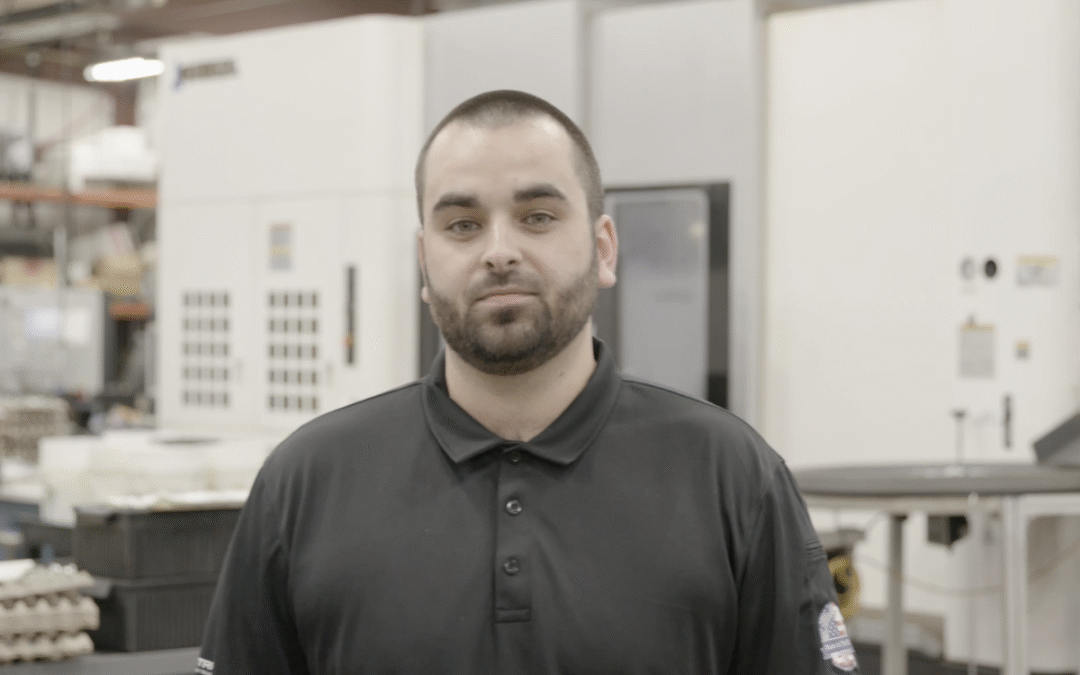
There’s a common assumption that people who thrive in precision manufacturing have been headed there their whole lives — raised in garages, trained in vocational shops, surrounded by machines from an early age.
Erik didn’t fit that picture at all.
A Degree That Didn’t Lead Where He Expected
Erik spent his college years studying Criminal Justice. Like many graduates, he entered the workforce looking for a career that felt stable, challenging, and worth committing to. Once he was there, the reality set in. The environment and the culture weren’t what he was looking for, and he realized that staying would mean forcing a fit that just wasn’t there.
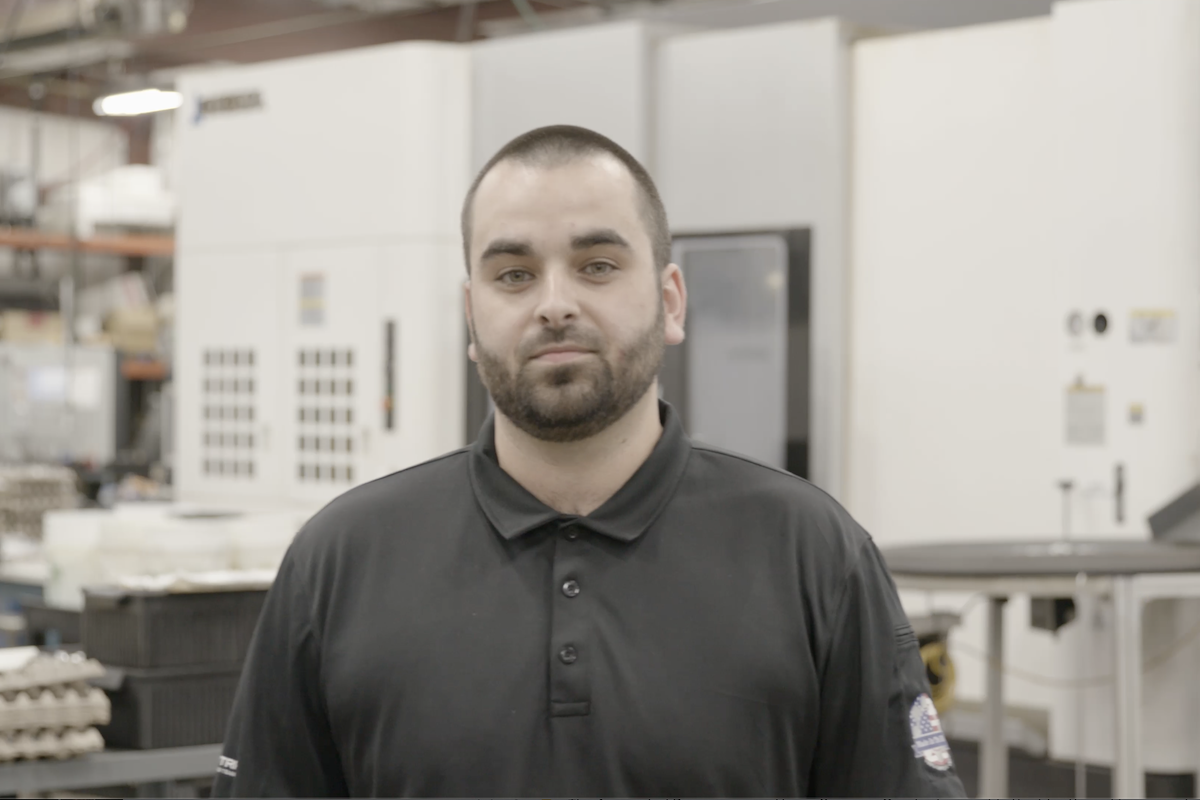
When a friend suggested he take a look at Lampin, Erik was skeptical. He had the work ethic. He had the discipline. What he didn’t have was a manufacturing background — and he wasn’t sure that would be enough.
Walking Into the Unknown
The first days on a manufacturing floor can be intimidating for anyone, especially when you’re surrounded by high-speed, multi-axis machines that leave little room for error. For Erik, it all felt foreign at the beginning. The level of precision, the expectations, the complexity of the equipment — it was a far cry from anything he’d studied in school.
What surprised him was the environment. At Lampin, no one expected him to arrive fully formed. The expectation wasn’t instant expertise — it was curiosity, drive, and a willingness to learn.
Learning the Craft, Step by Step
Erik started where everyone does: on a two-axis lathe, learning the fundamentals of metalworking, measurement, and process control. He didn’t learn alone. Experienced teammates stepped in, walking him through setups, answering questions, and helping him understand not just what to do, but why it mattered.
As his confidence grew, so did the complexity of his work. Each new challenge built on the last, and over time, Erik found himself drawn deeper into the technical side of precision manufacturing.
Today, he runs advanced multi-axis systems — machines capable of producing complex parts in a single setup. It’s work that demands focus, problem-solving, and absolute attention to detail. And it’s work he never imagined himself doing when he first started.
The Power of Ownership
Lampin is 100% employee-owned, a structure that fundamentally changes the relationship between a company and its team.
So, what does this mean in practice? It means that every person on the shop floor is a stakeholder, not just an employee. Through the Employee Stock Ownership Plan (ESOP), hard work translates directly into company equity. As Lampin succeeds, the value of that ownership grows, providing team members with a tangible stake in the company’s future and a powerful vehicle for long-term retirement wealth.
Finding Stability — and Ownership
Erik’s path from Criminal Justice to precision manufacturing isn’t about reinvention for its own sake. It’s about patience, commitment, and being given the space to grow into a role that fits.
He found the technical challenge he was looking for. He found stability. And along the way, he became an owner — someone with a real stake in the company and the work it produces.
Is It Time for a Different Direction?
If you’ve spent years searching for a career that finally makes sense, Erik’s story is a reminder that the right path isn’t always the obvious one. Sometimes it’s the one you discover after you’re willing to start at the beginning and learn the craft.
Discover Where Your Drive Can Truly Take You
You don’t need years of shop experience to become an expert in multi-axis machining. We provide the mentorship and the technical training you need to turn your ambition into a sophisticated, high-tech career.